

Control Valve Market to Witness Strong 7.90% CAGR Driven by Industrial Automation Trends by 2035
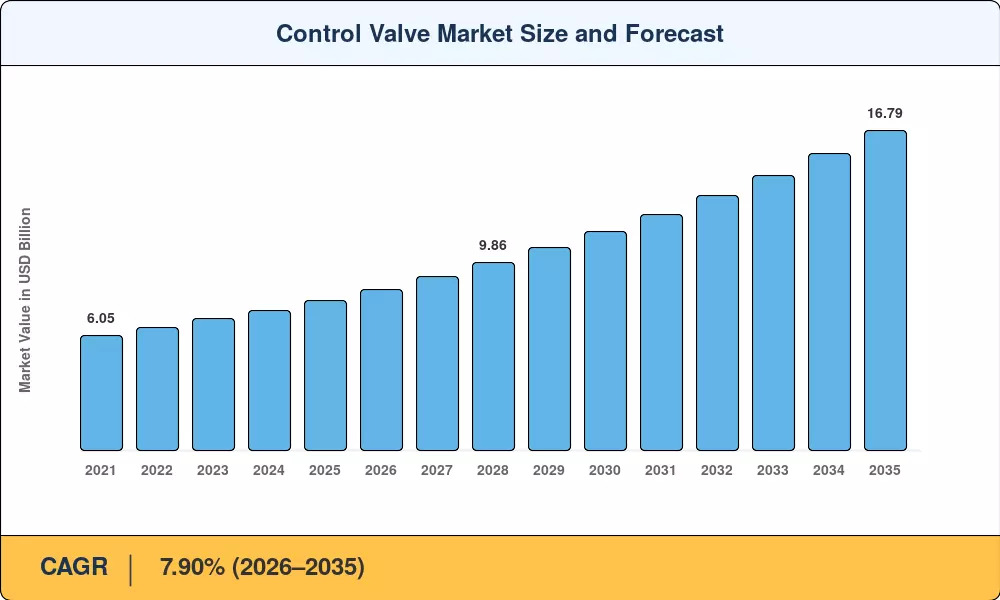
Control Valve Market Size
Butterfly valves accounted for 32.1% of Control Valve Market revenue in 2025, reflecting their widespread adoption in HVAC and water-distribution systems.
Pneumatic actuators held a 43.9% share of the Control Valve Market in 2025, favored for their fast stroking speeds in safety-critical loops.”
NEW YORK, NY, UNITED STATES, July 29, 2026 /EINPresswire.com/ -- The Control Valve Market reached USD 7.85 Billion in 2025 and is forecast to climb from USD 8.47 Billion in 2026 to USD 16.79 Billion by 2035, advancing at a 7.90% CAGR during 2026–2035.— Prashant Hake
Market Overview
Control valves Industry are mechanical devices used to regulate fluid flow, pressure, temperature, and level in various industrial processes by varying the size of the flow passage. These critical components are essential in process industries where precise control of fluids is necessary to maintain operational efficiency, safety, and product quality. Control valves operate by receiving signals from controllers and adjusting valve position accordingly, enabling automated process control across a wide range of applications including oil and gas refining, chemical processing, power generation, water treatment, and pharmaceutical manufacturing. The valve typically consists of a valve body, actuator, positioner, and accessories that work together to achieve accurate flow regulation under varying process conditions.
The control valve market is experiencing substantial growth driven by several key factors. The rapid expansion of industrial automation and digitalization in process industries is a primary growth driver, as manufacturers increasingly adopt smart control valves equipped with advanced sensors and communication capabilities. The growing demand for energy efficiency and emission reduction is propelling the adoption of high-performance control valves that minimize fugitive emissions and optimize process operations. Additionally, the expansion of oil and gas exploration and production activities, particularly in emerging economies, is creating significant demand for control valves in upstream, midstream, and downstream applications.
Key industry trends shaping the control valve market include the integration of Internet of Things (IoT) and artificial intelligence technologies, enabling predictive maintenance and real-time performance optimization. The development of smart control valves with self-diagnostic capabilities and wireless communication is revolutionizing asset management in industrial facilities. Furthermore, the shift toward environmentally friendly valve technologies that reduce emissions and energy consumption is gaining momentum, driven by stringent environmental regulations and sustainability goals.
The market is also benefiting from technological advancements in valve design and materials. Innovations such as advanced sealing technologies, corrosion-resistant materials, and high-pressure/high-temperature (HPHT) capabilities are expanding the application scope of control valves in challenging operating environments. The development of electric and electro-hydraulic actuators offering improved accuracy, reliability, and energy efficiency is replacing traditional pneumatic actuators in many applications.
Policy and regulatory frameworks significantly influence the control valve market landscape. The implementation of strict environmental regulations concerning fugitive emissions, such as the US EPA's Methane Rule and the EU's Industrial Emissions Directive, is driving the adoption of low-emission control valves. Safety standards including IEC 61508 and ISA 84 for functional safety in process industries are mandating the use of certified control valves in safety-critical applications. Additionally, government investments in infrastructure projects, including water treatment facilities and power plants, are stimulating market demand.
The demand outlook for control valves remains robust across multiple end-use industries. The ongoing industrialization and urbanization in developing regions are creating sustained demand for process control equipment. The renewable energy sector, particularly geothermal and solar thermal power plants, is emerging as a new growth avenue for control valve applications. The increasing complexity of industrial processes and the need for precise control to maintain product quality and operational efficiency will continue to drive market growth throughout the forecast period.
Get Free Sample Report for Detailed Market Insights: https://www.marketresearchfuture.com/sample_request/1940
Market Segmentation
By Type: The control valve market is segmented into linear motion valves, rotary motion valves, and others. Linear motion valves, including globe valves, gate valves, and diaphragm valves, dominate the market due to their precise flow control capabilities and widespread use in critical applications. Rotary motion valves, comprising ball valves, butterfly valves, and plug valves, offer advantages such as compact design, low maintenance, and suitability for on/off and throttling applications. The rotary segment is expected to witness faster growth due to increasing adoption in large-diameter applications and high-pressure services.
By Actuation Type: The market is categorized into pneumatic, electric, hydraulic, and manual actuators. Pneumatic actuators currently hold the largest market share due to their reliability, simplicity, and cost-effectiveness in process industries. Electric actuators are gaining significant traction because of their precision, energy efficiency, and integration capabilities with digital control systems. Hydraulic actuators are preferred for heavy-duty applications requiring high force output, while manual actuators continue to be used in small-scale operations and maintenance applications.
By Application: The market is segmented into flow control, pressure control, temperature control, and level control. Flow control applications dominate the market, driven by the need for precise regulation of fluid flow in chemical reactions, blending operations, and custody transfer. Pressure control valves are essential for maintaining safe operating pressures in pipelines and process vessels. Temperature control applications are critical in heat exchangers, reactors, and furnace operations, while level control is vital for tank and separator applications.
By End-User Industry: The control valve market serves various industries including oil and gas, chemicals and petrochemicals, power generation, water and wastewater treatment, pharmaceuticals, food and beverages, mining and metals, and others. The oil and gas industry is the largest end-user, accounting for a significant share of the market due to extensive valve requirements across upstream drilling, midstream pipeline, and downstream refining operations. The chemicals and petrochemicals sector follows closely, driven by complex process requirements and diverse fluid handling needs.
By Region: The market is analyzed across North America, Europe, Asia-Pacific, Latin America, and the Middle East and Africa. Asia-Pacific is the largest and fastest-growing regional market, fueled by rapid industrialization, expanding manufacturing capabilities, and major infrastructure investments in countries such as China, India, and Southeast Asian nations.
You can buy this market report at: https://www.marketresearchfuture.com/checkout?currency=one_user-USD&report_id=1940
Regional Analysis
North America: The North American control valve market is characterized by established industrial infrastructure and a strong focus on technological innovation. The United States holds the dominant position, driven by its extensive oil and gas industry, chemical manufacturing sector, and power generation facilities. The region is witnessing significant demand for smart control valves and advanced automation solutions as manufacturers modernize existing facilities. Canada contributes to market growth through its oil sands operations and ongoing pipeline infrastructure projects. Stringent environmental regulations and the implementation of emission reduction initiatives are prompting end-users to upgrade to low-emission control valves. The market is also benefiting from the growing shale gas production and associated midstream infrastructure development.
Europe: Europe represents a mature but technologically advanced market for control valves, with countries such as Germany, the United Kingdom, France, Italy, and the Netherlands leading in industrial automation and process control solutions. The region's strong emphasis on sustainability, energy efficiency, and emissions reduction is driving the adoption of innovative valve technologies. The European Union's stringent environmental directives and industrial safety regulations are compelling manufacturers to invest in high-performance control valves with enhanced reliability and environmental compliance. The chemical and pharmaceutical industries in Europe are significant consumers of control valves, requiring precision instruments for complex manufacturing processes. The renewable energy transition is creating new opportunities for valves in biogas plants, waste-to-energy facilities, and district heating networks.
Asia-Pacific: The Asia-Pacific region is the fastest-growing and largest market for control valves, driven by rapid industrialization, urbanization, and massive infrastructure development across major economies. China dominates the regional market, supported by its robust manufacturing sector, extensive chemical industry, and ongoing investments in power generation and water treatment facilities. India is emerging as a high-growth market, fueled by government initiatives such as "Make in India" and significant investments in oil refining, petrochemicals, and infrastructure projects. Japan and South Korea represent developed markets with sophisticated industrial automation requirements and a strong focus on advanced process control technologies. Southeast Asian countries including Indonesia, Thailand, Malaysia, and Vietnam are experiencing growing demand due to expanding manufacturing activities and foreign direct investments in industrial projects.
Latin America: The Latin American control valve market is influenced by the region's oil and gas resources, mining activities, and infrastructure development. Brazil is the largest market in the region, driven by its offshore oil exploration, refining operations, and extensive industrial base. Mexico benefits from its proximity to the US and growing manufacturing sector. Argentina, Colombia, and Chile are emerging markets with opportunities in oil and gas, mining, and water treatment applications. However, political and economic volatility in some countries presents challenges to sustained market growth.
Middle East and Africa: The Middle East is a significant market for control valves, driven by extensive oil and gas production, refining, and petrochemical activities in countries such as Saudi Arabia, the United Arab Emirates, Qatar, and Kuwait. The region is investing heavily in expanding downstream capabilities and developing gas processing facilities. Ongoing infrastructure projects, including new refineries, chemical complexes, and power plants, are creating substantial demand for control valves. Africa presents emerging opportunities, particularly in oil and gas developments in Nigeria, Angola, and Mozambique, along with water treatment and power generation projects across the continent.
Competitive Landscape / Key Players
The global control valve market is highly competitive, characterized by the presence of established multinational corporations, specialized manufacturers, and regional players. Key companies operating in the market include:
Emerson Electric Co.: A global leader in process automation and control solutions, offering a comprehensive portfolio of control valves under its Fisher, A.S.T., and Bettis brands. Emerson's focus on digital transformation and smart valve technologies strengthens its market position.
Flowserve Corporation: A premier provider of flow control products and services, offering control valves under its Valtek, Flowserve, and Edward brands. Flowserve serves critical applications in oil and gas, chemical, and power generation industries.
Cameron International Corporation (Schlumberger): A major player in the oil and gas industry, providing control valves and related products for upstream and midstream applications through its Cameron and Foster Wheeler brands.
Pentair plc: A global water and fluid solutions company offering control valves for water treatment, chemical processing, and industrial applications through its Pentair Valves & Controls and Anderson Greenwood brands.
Crane Co.: A diversified manufacturer of engineered industrial products, providing control valves for critical service applications across various industries under its Crane, Saunders, and Xomox brands.
Other notable players include Samson AG, Rotork plc, Metso Corporation, IMI plc, Neway Valve Co., Ltd., and KITZ Corporation. These companies compete on factors such as product quality, technological innovation, customization capabilities, distribution network, and after-sales service.
Strategic developments in the market include product launches, mergers and acquisitions, partnerships, and expansion into emerging markets. Companies are investing in research and development to introduce advanced control valves with enhanced features, improved reliability, and environmental compliance.
Latest Industry News & Developments
December 2025: Emerson Electric Co. announced the launch of its next-generation Fisher™ control valve platform featuring integrated predictive maintenance capabilities and advanced diagnostics. The new valve incorporates IoT sensors and analytics to enable real-time monitoring of valve health and performance, reducing unplanned downtime and maintenance costs for industrial customers.
October 2025: Flowserve Corporation signed a strategic partnership with a major Middle Eastern petrochemical company to supply high-performance control valves and services for a large-scale chemical complex expansion project. The agreement includes the deployment of Flowserve's advanced valve technologies designed to enhance operational efficiency and reduce emissions in critical applications.
September 2025: Samson AG inaugurated a new manufacturing facility in India to meet the growing demand for control valves in the Asia-Pacific region. The facility is expected to enhance Samson's production capacity and provide localized support for customers in India and surrounding markets, aligning with the company's global expansion strategy.
Market Challenges & Opportunities
Key Restraints: The control valve market faces several challenges that could impact its growth trajectory. The high initial cost of advanced control valves, particularly those with smart capabilities and specialized materials, creates budget constraints for end-users, especially in price-sensitive markets. The complexity of valve maintenance and the need for specialized technical expertise for installation, calibration, and troubleshooting pose operational challenges for facility operators. Supply chain disruptions and volatility in raw material prices affect manufacturing costs and delivery schedules. Additionally, the availability of alternative flow control technologies and the trend toward minimizing piping in process designs can limit market expansion.
Emerging Opportunities: The control valve market presents substantial opportunities in the digitalization of industrial processes. The development of Industry 4.0-compatible valves with enhanced connectivity and data analytics capabilities offers significant growth potential. The increasing adoption of wireless and battery-operated control valves for remote and hazardous locations opens new application areas. The transition to greener energy and the development of hydrogen infrastructure, including production, storage, and distribution networks, will create demand for specialized control valves. The growing emphasis on predictive maintenance and the use of digital twins in process optimization presents opportunities for service-focused business models.
Future Potential: The long-term potential of the control valve market is supported by the ongoing industrialization of emerging economies, the modernization of existing industrial infrastructure in developed regions, and the continuous need for process control in manufacturing. The integration of artificial intelligence and machine learning in valve control systems will enhance automation capabilities and operational efficiency. The development of valves capable of handling extreme conditions, such as high-pressure hydrogen and supercritical fluids, will open new application frontiers. The market's resilience and essential role in industrial operations ensure sustained demand, while innovation and technology adoption will drive future growth.
To explore more market insights, visit us at: https://www.marketresearchfuture.com/reports/control-valve-market-1940
Final Market Summary
The global control valve market is poised for robust growth, with projections indicating an expansion from USD 8.47 billion in 2026 to USD 16.79 billion by 2035, at a compound annual growth rate of 7.90%. This growth trajectory is underpinned by rapid industrial automation, increasing demand for energy efficiency and emissions reduction, and the expansion of process industries worldwide. Asia-Pacific emerges as both the largest and fastest-growing regional market, benefiting from extensive manufacturing capabilities, infrastructure investments, and urbanization. Technological advancements in smart control valves, IoT integration, and advanced materials are reshaping the industry landscape, while stringent environmental regulations and safety standards drive the adoption of innovative solutions. Despite challenges related to high costs, technical complexities, and supply chain vulnerabilities, the market presents substantial opportunities in digitalization, renewable energy applications, and emerging industrial sectors. The critical role of control valves in ensuring precise process control, operational safety, and product quality across diverse industries ensures sustained demand and long-term market potential throughout the forecast period.
More Related Reports from MRFR Library:
Biodiesel Market: https://www.marketresearchfuture.com/reports/biodiesel-market-1521
Managed Pressure Drilling Market: https://www.marketresearchfuture.com/reports/managed-pressure-drilling-market-1586
Sand Screen Market: https://www.marketresearchfuture.com/reports/sand-screen-market-1589
Blowout Preventer Market: https://www.marketresearchfuture.com/reports/blowout-preventer-market-1595
Biomass Power Market: https://www.marketresearchfuture.com/reports/biomass-power-market-1692
Coiled Tubing Market: https://www.marketresearchfuture.com/reports/coiled-tubing-market-1738
Power Transmission Cables Market: https://www.marketresearchfuture.com/reports/power-transmission-cables-market-1768
Oil & Gas Separators Market: https://www.marketresearchfuture.com/reports/oil-gas-separator-market-1809
Carbon Capture and Storage Market: https://www.marketresearchfuture.com/reports/carbon-capture-storage-market-1862
High Pressure Pumps Market: https://www.marketresearchfuture.com/reports/high-pressure-pumps-market-1880
Larry Wilson
WantStats Research And Media Pvt. Ltd.
+1 855-661-4441
email us here
Visit us on social media:
LinkedIn
Facebook
YouTube
X
Legal Disclaimer:
EIN Presswire provides this news content "as is" without warranty of any kind. We do not accept any responsibility or liability for the accuracy, content, images, videos, licenses, completeness, legality, or reliability of the information contained in this article. If you have any complaints or copyright issues related to this article, kindly contact the author above.
